Showing posts with label Technology. Show all posts

Why Facebook's 'Teen Exodus' Won't Do Real Damage

Why Facebook's 'Teen Exodus' Won't Do Real Damage

Recent headlines have depicted Facebook as the Internet version of a failed nightclub: Abandoned by pretty young things and invaded by middle-aged minivan owners, the once see-and-be-seen destination has begun a slow slide toward total irrelevance.

Three million teens have fled Facebook in three years, a report last week warned. Another from last year declared Facebook less relevant to teens than ever before. Facebook recently conceded that younger teens are less active now than they were -- a surefire sign, some seem to think, that matters are so dire even Mark Zuckerberg has stopped his sugarcoating.

But even if teens are abandoning Facebook -- and research by other firms suggests they aren't in any meaningful way -- the loss wouldn't do serious damage to the company, according to online advertising experts and researchers studying youth behavior.

Clark Fredricksen, a vice president at the market research group eMarketer, says he’s been inundated with questions about how badly a drop in teen usage hurts Facebook. "Ultimately,” he says, “the answer is it doesn’t.”

Whether teens hang out on Facebook or not, the company will have exactly what it needs to make money on them should they ever return: their identities and their preferences. Teens, like many others online, use Facebook profiles to sign in to services like Gilt Group and TripAdvisor, which can often feed salient personal details back to the ever-expanding Facebook data trove that makes advertisers salivate.

So Facebook would still have teens’ data flowing into its coffers, could still boast the only social network of its kind and reach, and would still have access to the audiences that are most prized by advertisers (a demographic that doesn’t resemble the typical Justin Bieber fan). As the teen heartthrobs of One Direction would say, “So, chill up/What you worry about?"

The doomsayers warn that if Facebook loses teens’ interest, it will forfeit an entire generation of would-be members; be deprived of precious advertising dollars; and suffer a larger exodus as the young tastemakers lure parents and siblings to join them on the WhatsApps and Snapchats of the world.

That’s like saying supermarkets will fail because 15 year-olds get vending machines at school. Facebook serves a different purpose than the world’s more boutique social media services. Instagram may eat up time otherwise spent browsing photos on Facebook, but can’t replace it outright. (Facebook also owns Instagram, one of the top sites blamed for wooing away teens.)

The same qualities that make Facebook a turn off to teens -- its size, its emphasis on real identities, the presence of parents and the permanence of posts -- could be a draw when those same people graduate high school. They’ll have a desperate need to stalk cute sophomores in their BIO 101 lecture, or keep tabs on friends back home. And they'll really only have one way to do it: In the U.S., there’s no other social network that combines the same reach, emphasis on real names, messaging tools and life-scrapbooking function as Facebook.

“I don’t think that Facebook loses these teens forever,” says Mikołaj Jan Piskorski, a professor at Harvard Business School and author of A Social Strategy: How We Profit from Social Media. “These teens will come back because Facebook is a very helpful utility for them [later in life] -- it’s just not a helpful utility when they’re teens.”

Piskorski’s analogy is apt: Facebook is closer to conEdison than Studio 54. Like a utility, Facebook isn’t cool or all that fun, but we desperately need it and can’t avoid dealing with it once we exit our teens. Even the British high-schoolers who declared Facebook “dead and buried” in a recent survey acknowledged that Facebook beats Twitter and Instagram when it comes to core features, like tracking relationships, organizing parties and sharing photos.

A decline in “teenthusiasm” for Facebook wouldn’t necessarily chip away at the personal information Zuckerberg has on file. The company’s social sign-in tool, which lets you bypass site registrations by signing in with your Facebook accounts, ensures people are feeding details back to Facebook without opening its app or visiting its site. If you listen to a song on Spotify or follow a board on Pinterest, you’ll give Facebook some idea of what concert you’d buy tickets to, or the brand of couch you’re eyeing for your new place.

And all the advertising dollars Facebook would allegedly lose if teens disappear? “Most advertisers aren’t looking to reach teens,” says Fredricksen.

Instead, he explains, they’re eager to pitch the people who manage homes, have their own money to spend and are picking out products for the first time by themselves. In other words, people between 18 and 34 years old.

“From an advertiser standpoint, not having teens on Facebook isn’t really a big deal at all because advertisers tend to be looking at different groups than that,” he adds.

Karsten Weide, an analyst with the market research firm IDC, notes that attracting older individuals to Facebook may be unpalatable for teens, but it makes the social network "more attractive for advertisers, not less so.” “Essentially,” he wrote in an email, “they're moving from being the MTV of social networks to being the ABC of social networks."

Or maybe it's becoming both at once: As Baby Boomers and grandparents have gradually embraced Facebook, it’s remained ubiquitous among teens. According to a 2013 report by the Pew Research Center, 94 percent of social media-using teens have a Facebook account. And 81 percent say they use it more than any other profile. (Just 7 percent said the same for Twitter, the second most popular choice behind Facebook.)

Rather than teens fleeing Facebook because they're sick of it, it may be that Facebook has become so engrained, such an unbreakable habit, that it's boring.

“Facebook is almost like dial tone to teens," says Matt Britton, CEO of the youth marketing agency MRY. "It's something they just expect to be part of the Internet.”
Read More »

One Frightening Chart Shows What You Might Pay For Internet Once Net Neutrality Is Gone

A graphic making its rounds on the web this week offered a glimpse of what the Internet might look like if net neutrality disappears. The takeaway? Not good.

One Frightening Chart Shows What You Might Pay For Internet Once Net Neutrality Is Gone

A federal appeals court on Tuesday struck down an Federal Communications Commission order that required Internet service providers to abide by the rules of “net neutrality.” ISPs had previously been forced to treat all types of web traffic equally -- meaning providers couldn’t block some sites or speed up loading times for others. Tuesday's decision means corporations can now block or slow down loading times for pages they don’t like, or could charge businesses a fee to have their pages load more quickly -- or at all.

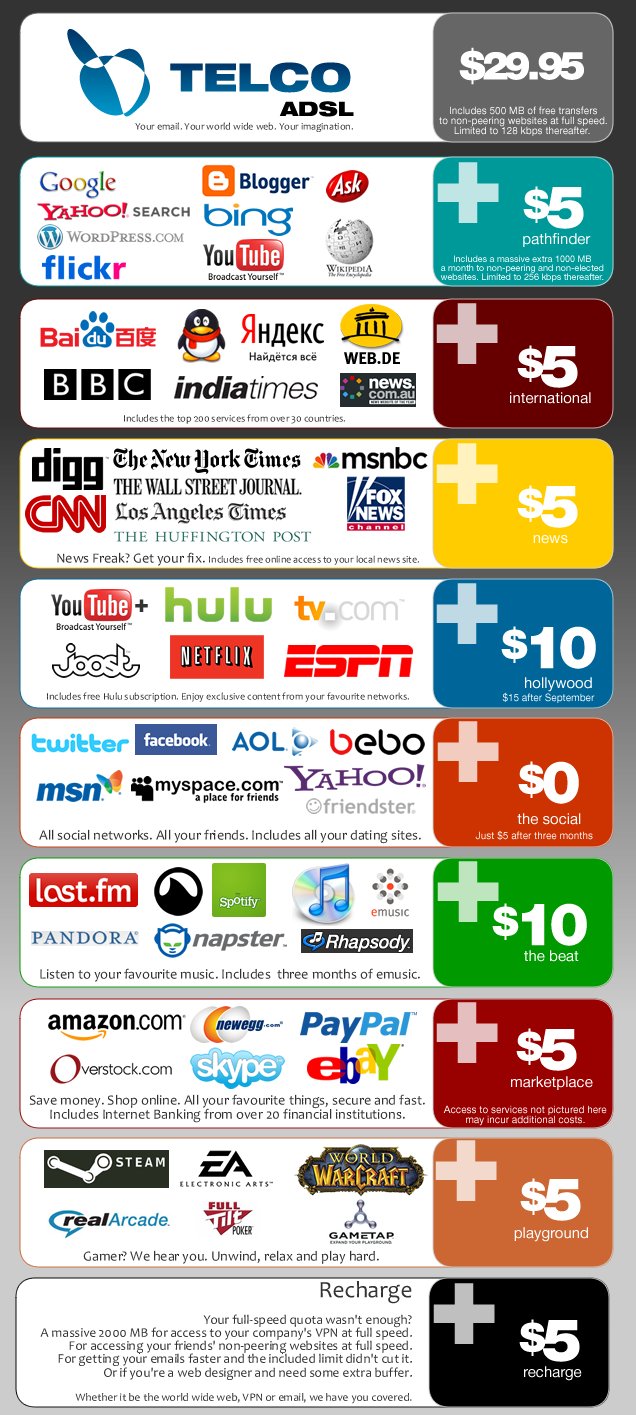
Now, consumers looking to get Internet access might be met with something like this hypothetical set of pricing options like this, pointed out by Buzzfeed earlier this week:


This graphic was created by Reddit user quink, who wanted to illustrate what happens if net neutrality disappears. Originally created when Comcast tried to appeal the FCC's right to enforce net neutrality in 2009, the graphic is experiencing a renaissance in relevance after the ruling this week.

Though the FCC could try to rewrite its rule or appeal the decision, in the meantime ISPs like Comcast, Verizon, AT&T and Time Warner Cable are free to make deals with companies promising quicker content delivery in exchange for payment -- essentially creating Internet "fast lanes" for wealthy companies and making their websites easier to access than those of nonprofits, activist groups and smaller competitors.

Quink's graphic shows web-based service offerings (offered by the fictional TELCO ADSL) that look suspiciously like cable bundles. Very, very basic Internet is offered for a "starter" price of $29.95, while popular sites are bundled together and offered as optional add-ons for $5 to $10. As costs add up, people in quink's world are left with tough choices -- choosing, for instance, between access to online marketplaces and access to the news.

As for smaller sites? In quink's hypothetical world without net neutrality, they're out of luck. Any sites outside the bundles might count towards a data cap, while sites in the bundles wouldn't, or small sites might just load really, really slowly.

Presumably, websites that want to be included in "bundles" would have to pay providers like TELCO for the privilege. It may sound crazy, but it's the future envisioned by experts who talk about what the end of net neutrality might mean for small businesses.

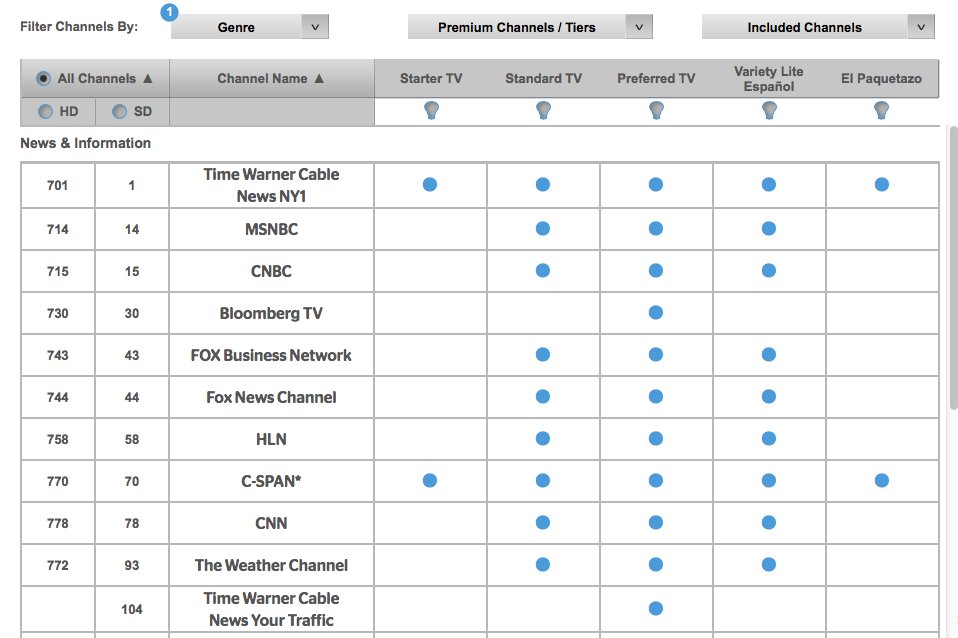
The really remarkable thing about quink's graphic, though, is how very much it looks like the current state of cable television. For an example, we pulled a screenshot of the current Time Warner Cable options for customers in Manhattan. Each subscription option contains a bundle of channels, like so:


"Information shouldn't become a luxury," Todd O’Boyle, program director of the liberal advocacy organization Common Cause, told The Huffington Post earlier this week. And yet it's clear that at least as far as the purveyors of cable television are concerned, information is a luxury -- and one that should be paid for. Those who subscribe to Time Warner Cable's expensive "Preferred TV" bundle get access to all the TV news channels, while subscribers to Time Warner's relatively bare-bones "Starter TV" bundle must content themselves with C-SPAN and Time Warner Cable News NY1.

Will the end of net neutrality see ISPs imitating cable companies? It seems likely, given that many ISPs already are cable companies.

The more pressing question is whether the FCC and the federal government will allow this to happen. Some commentators, like the Atlantic's Kevin Werbach, believe the D.C. Circuit Court's ruling will simply pave the way for better enforcement of net neutrality in the future. We certainly hope he's right.
Read More »

U.S. Appeals Court Deals Major Blow To Net Neutrality

U.S. Appeals Court Deals Major Blow To Net Neutrality

WASHINGTON (Reuters) - A U.S. appeals court on Tuesday struck down the government's latest effort to require internet providers to treat all traffic the same and give consumers equal access to lawful content, a policy that supporters call net neutrality.

The Federal Communications Commission did not have the legal authority to enact the 2011 regulations, which were challenged in a lawsuit brought by Verizon Communications Inc, the U.S. Court of Appeals for the District of Columbia Circuit said in its ruling.

"Even though the commission has general authority to regulate in this arena, it may not impose requirements that contravene express statutory mandates," Judge David Tatel said.

Although the three judge panel were unanimous about the outcome, one wrote separately that he would have gone even further in restricting the FCC's authority.

The FCC could appeal the ruling to the full appeals court or to the U.S. Supreme Court, or it could attempt to rewrite the regulations to satisfy the appeals court.

During the oral argument in September, Verizon's lawyer said the regulations violated the company's right to free speech and stripped control of what its networks transmit and how.

The eventual outcome of the dispute may determine whether internet providers can restrict some content by, for instance, blocking or slowing down access to particular sites or charging websites to deliver their content faster.
The FCC had no immediate comment on the ruling. Verizon also had no immediate comment.


Read More »

Fitbit, We are sorry..

Fitbit Apologizes To Customers Who've Experienced Skin Reactions

Fitbit, the company that makes wearable activity trackers, has apologized following widespread reports that its latest wrist-worn device has caused severe skin irritation for some owners.

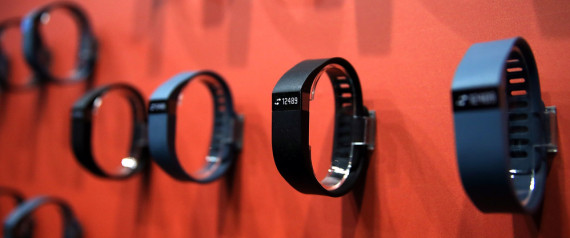
In a statement sent to The Huffington Post on Tuesday evening, Fitbit said that the company is "sorry that even a few consumers have experienced these problems" with Force, its newest product. Fitbit encouraged people who experienced "any irritation" to stop wearing the $130 device, and said it has set up a dedicated email account for people to communicate directly with the company.

The Huffington Post interviewed more than a half-dozen people who said they experienced skin irritation they attributed to Force, a wristband that tracks distance, steps, stairs climbed, calories burned and sleep. Symptoms ranged from red, itchy skin to painful blisters that would ooze or bleed. Some Force owners said they sought medical care, and were prescribed prednisone and antibiotics.

A growing number of people who bought Force have taken to Fitbit's online forum to voice complaints, share experiences and upload photos of their irritated skin. Many also expressed frustration that Fitbit hasn't been more responsive.

By Tuesday, after Consumerist and The Huffington Post reported on the complaints, a Fitbit moderator who had responded to some owners in December, but fell silent for a couple of weeks after Christmas, again began to reply to people in the forum.

It is unclear what causes the irritation. Fitbit said it may be caused by an allergy to nickel, found in the stainless steel used in Force. Some of the people HuffPost interviewed said they had no known allergies and had worn metal watches and jewelry without any irritation for many years. Some who posted in the forum said they had worn Flex, Force's predecessor, which also contains traces of nickel, without any issue.

Fitbit did not respond to questions from The Huffington Post about the number of complaints it has received or how many devices may be affected.

Fitbit has said it will provide "immediate" refunds for people who bought Force, or they can exchange it for a different device.

Full statement form Fitbit:

We are looking into reports from a very limited number of Fitbit Force users who have been experiencing skin irritation, possibly as a result of an allergy to nickel, an element of surgical-grade stainless steel used in the device.
We suggest that consumers experiencing any irritation discontinue using the product and contact Fitbit at force@fitbit.com if they have additional questions. Customers may also contact Fitbit for an immediate refund or replacement with a different Fitbit product.

We are sorry that even a few consumers have experienced these problems and assure you that we are looking at ways to modify the product so that anyone can wear the Fitbit Force comfortably. We will continue to update our customers with the latest information.
Read More »

Nobody 'Likes' Your Status Updates Any More? Blame Facebook


Do your Facebook friends seem inactive? Notification numbers shrinking by the day?

It's not necessarily that your friends are bored by the itemized details of your life (but aggressive food Instagrammers shouldn't rule that out). It's possible your friends never had the opportunity to see your status updates in the first place, explains Derek Muller of Veritasium, an educational science channel on YouTube.

In the above video Muller explains that recent iterations of Facebook's newsfeed algorithm are making it harder and harder for your posts to get viewed. Muller suspects that the pared down newsfeeds are part of Facebook's larger monetization strategy. If you have content that you'd like to share and Facebook won't share it for free anymore, perhaps you'll be willing to pay to promote your status. Watch Muller's video for details.

Read More »

To catch a thief

Smartphone Thefts Rose In 2013 Despite New Push To Stop Them

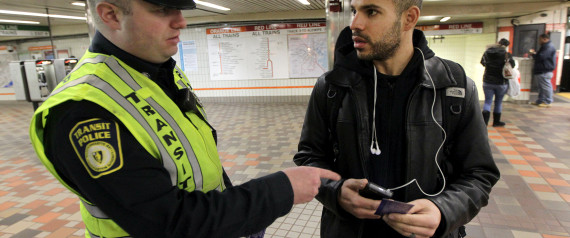
Thefts of smartphones and other mobile devices increased in major cities nationwide in 2013, despite new efforts by law enforcement and the industry to reduce what has become an epidemic of often violent street crime according to police.

Nearly 2,400 cell phones were stolen in San Francisco last year, a 23 percent rise from the year before, according to police. More than half of phones stolen in the city last year were iPhones.

San Francisco police spokesman Albie Esparza said the uptick could be attributed to more people reporting phone thefts or the September launch of a new generation of iPhones, which thieves can sell for higher prices on the black market.

The department “has been aggressively trying to educate the public on smartphone theft safety to prevent being a victim of robbery,” Esparza said in an email.

In New York City, 8,465 Apple products were reported stolen last year, an 8 percent increase from the year before, according to police statistics. It was the second year in a row that thefts of iPhones and iPads went up in the city.

New York City Mayor Bill de Blasio pledged during his campaign last year to add more police officers to the streets to address the growing number of robberies targeting Apple devices. He also joined a nationwide effort to pressure smartphone makers to create a "kill switch" that when activated would completely shut down a phone, reducing the incentive to steal them.

In Washington D.C., cell phone thefts increased 6 percent last year compared to the previous year, according to police. In Denver, iPhone thefts rose 22 percent last year, the Denver Post reported.

Across Philadelphia and its suburbs, there were nearly 500 cell phones stolen on the trains, buses and platforms of the Southeastern Pennsylvania Transportation Authority, or Septa, last year, a 6 percent increase from 2012 and a 44 percent spike from 2011, according to the transit agency.

The surge in phone thefts nationwide comes despite several new initiatives aimed at preventing them.

Wireless carriers have started sharing blacklists of stolen phones so they can block those devices from being reactivated on their networks. But the blacklists have thus far failed to stop thieves from snatching phones and trafficking them overseas, where they can be sold for higher prices and be reactivated on foreign wireless networks, a Huffington Post investigation found last year.

Police in New York and San Francisco have sought to disrupt the smartphone black market by launching undercover sting operations that involve a plainclothes officer pretending to hawk stolen iPhones on the streets and other officers swooping in to arrest the buyers.

San Francisco District Attorney George Gascon and New York Attorney General Eric Schneiderman launched their "Secure Our Smartphones" initiative last summer aimed at pressing the industry to adopt technology that could make stolen phones worthless to thieves. More than 100 officials from across the country -- including attorneys general from six states and district attorneys and high-level police officials from eight major cities -- have joined the effort.

Since then, Apple and Samsung have announced new security features that they said would allow consumers to render their devices useless once stolen.

But the effectiveness of Apple’s new anti-theft feature, which was introduced in September, remains to be seen, and wireless carriers have blocked the rollout of Samsung’s kill switch feature to preserve their profits from selling phone insurance, according to Gascon.

Schneiderman spokesman Damien LaVera urged patience in response to the uptick of smartphone thefts in 2013.

“While there have been important steps forward in the half a year since the Secure Our Smartphone Initiative was launched, we fully expect it will take time to ensure effective theft deterrents are a feature on all products so [we] can make smartphone theft a thing of the past,” LaVera said in a statement.
Read More »

2013 Was The PC's Worst Year Ever

2013 Was The PC's Worst Year Ever

Personal computer sales sank even further during the holiday shopping season, capping the steepest annual decline in PC shipments since desktop and laptop machines began to appear on people's wish lists decades ago.

The fourth-quarter numbers released Thursday by the research firms Gartner Inc. and International Data Corp. serve as the latest testament to the growing popularity of smartphones and tablet computers. The mobile devices are typically less expensive than PCs and more convenient to use than clunky desktops, making them appealing alternatives to go online for work, entertainment, information and communications.

Gartner cited the mobile shift as the main reason for a 7 percent drop in worldwide PC sales from the previous year during the three months ending in December, a period when the demand for electronics is at its peak. It marks the seventh consecutive quarter of decreasing PC sales.

IDC came up with a slightly different figure. By its calculations, worldwide PC shipments slipped by nearly 6 percent during the fourth quarter.

For all of last year, PC sales plunged 10 percent, according to both Gartner and IDC. Shipments of desktop and laptop computers had never slipped by more than 4 percent in any other previous year. The other annual declines occurred in 2001, in the midst of a technology bust driven by a collapse in the Internet sector, and in 2012, which marked the early stages of the migration to tablet computers.

Somewhere between 314 million and 316 million PCs shipped last year, according to Gartner and IDC. That means PCs have backtracked to roughly the same level as in 2009 when the worldwide economy was struggling to shake off the Great Recession.

PC sales are expected to deteriorate a little more this year, with IDC projecting a decline of 4 percent.

Hewlett-Packard Co., the largest U.S. maker of PCs, had a particularly tough fourth quarter as its shipments declined by 7 percent to 9 percent from the same time in 2012, according to Gartner and IDC.

That left HP as the world's second largest PC maker behind China's Lenovo Group, whose fourth-quarter shipments climb by 9 percent, according to IDC. Lenovo begins this year with a worldwide market share of nearly 19 percent compared to 17 percent for HP.

Even though HP is still struggling, the worst of the PC slump appears to be over in the U.S., where the magnitude of the sales declines has been easing in recent quarters.

U.S. shipments of PCS were down by less than 2 percent in the fourth quarter, according to IDC. Analyst Rajani Singh of IDC believes more people in the U.S. have started to replace older PCs as they have realized that they still need a desktop or laptop machine to perform many tasks, such as typing lengthy documents and creating spreadsheets.

But PC makers still face challenges in less developed countries, where many people are unlikely to ever buy a clunky desktop, said Gartner analyst Mikako Kitagawa. "In emerging markets, the first connected device for consumers is most likely a smartphone, and their first computing device is a tablet," Kitagawa said.
Read More »

Here's What Happens To Your iPhone In The Bitter Cold

Here's What Happens To Your iPhone In The Bitter Cold

When the temperature drops below freezing, iPhones can start malfunctioning: Your smartphone might not sense your touch, the battery dies faster and, if it's cold enough, the thing just shuts off.

On its website, Apple suggests that you only use your (4th generation or later) iPhone in environments between 32º and 95º F, since "low- or high-temperature conditions might temporarily shorten battery life or cause the device to alter its behavior to regulate its temperature."

If the temperature drops below 32º, your best bet is keeping your phone turned off and stored somewhere warmer, Apple suggests. It'll probably still work though -- so you can take your chances. But when the temperature gets crazy low, falling below -4º, Apple says to put it away. (You should also store it when the mercury tops 113º F.)

Toronto's Global News recently ran an experiment to see how iPhones reacted to the cold. They took two iPhones of the same model and left one outside in the cold (where temps barely edged above zero Fahrenheit ) and took the other one inside. Thirty minutes later, the iPhone that was inside had gone from 100 percent battery life to 99 percent, while the one left in the cold had dropped to 86 percent from 100. When they tried to use the cold iPhone it shut off.

If your iPhone has been been acting differently during the polar vortex these past few days, you're not alone:

To keep your iPhone warm, you can keep it close to your body and use a case. Also, stop checking your iPhone so much when you're walking outside!!

It's not just the iPhone that struggles in the cold. Finland's MikroPC tested 15 cell phones to see how they would fare in increasingly cold temperatures, and all of them eventually failed once they got cold enough. The first to stop working was the iPhone 4S, which died at 14 degrees. The Samsung Galaxy II lasted the longest, not shutting down until the temperature reached -31 degrees.
Read More »

Twitter Co-Founder Defends His Overhyped New Thing

Twitter Co-Founder Defends His Overhyped New Thing

For nearly a year famous person Biz Stone has dramatically teased us with his mysterious new app. He told us the app's name -- Jelly -- and little else.

The tech world grew giddy with anticipation. Stone, you see, is one of the cofounders of Twitter -- another app with a funny name. It's now worth billions.

Finally, on Tuesday Stone let us in on the secret. And Jelly turns out to be a ... a search engine?

Sort of.

Jelly is a new, free question and answer app for iPhones and Android phones. The app allows you to ask friends and friends-of-friends questions. You connect Jelly with your Facebook or Twitter account (or both) and then you take a photo and ask a related question.

The Huffington Post spoke to Stone by phone on Tuesday and asked him about the hype around his app, which has intensified in the months since he wrote a mysterious, vague blog post announcing his new venture.

Stone was modest about the all the publicity: "Because of Twitter I've gained notoriety, so that's given it a boost," Stone told HuffPost in an interview. "It's a blessing and a curse, because when we've been working on it we couldn't do it without anyone watching."

Jelly is also backed by some big names, including Bono, Al Gore, LinkedIn co-founder Reid Hoffman and Twitter co-founders/entrepreneurs Jack Dorsey and Evan Williams. The company is still small (there are eight employees) but Stone expects the app to be profitable, since, as he says, it's "a new way to search" and search is a good business to be in.

Sure, it's a good business to be in theoretically, but it's a business that belongs to Google. If Jelly wants to challenge Google, it would have to revolutionize search.

Here's how Jelly works: Say you're walking along and see a building your don't recognize. With Jelly, you would take a photo of the building and upload it, asking "What is this building?" In theory, at least one of your friends or someone in your extended friend group would know the answer and respond to you. People need to have Jelly to be able to see and answer questions, but you can forward a question to someone who doesn't have Jelly if you want his or her help.

Original post here Technology on HuffingtonPost.com
Read More »

Facebook’s Messenger Lawsuit: Data Mining ‘Dislike’

Facebook’s Messenger Lawsuit: Data Mining ‘Dislike’

Facebook’s popular messenger service is at the center of a new lawsuit that alleges the social network monitors private messages and shares the data it mines with marketers.

Attorney Michael Sobel filed the lawsuit in a federal court in San Jose, Calif., on Thursday that alleges Facebook scans private messages including links to other websites to “improve its marketing algorithms and increase its ability to profit from data about Facebook users,” according to the LA Times. The information is allegedly shared with advertisers if the private messages contain a “Like” in them, along with a shared link.

The plaintiffs are hoping to turn the suit into a class action movement on behalf of all Facebook users that have sent or received a private message in the past two years.

Information Security Solutions firm High-Tech Bridge published a report in August claiming that private messages that included a link sent on Facebook’s messaging service could be used for potential robot spying.

Facebook told FOXBusiness.com it plans to fight the suit. "We believe the allegations in this lawsuit have no merit and we will defend ourselves vigorously," a spokesperson said in an email message.

FOXBusiness.com also reached out to the plaintiff’s attorney, Michael Sobel, for comment, but did not receive a response at press time.

According to Facebook’s posted terms of service, “We may enable access to public information that has been shared through our services. We may allow service providers to access information so they can help us provide services.”

Gant Redmon, general counsel for incident response software company Co3 Systems, says the lawsuit may hold up, although the federal statute it is relying on may be a bit of a stretch.

“This may gain traction with the FTC [Federal Trade Commission] because they go after anyone that is doing something with people’s information and not disclosing it,” Redmon says. “The No.1 thing the FTC loves to go after people for when it comes to privacy is a policy that doesn’t click with the actual use of personal information.”

Redmon describes Facebook’s privacy policy as long winded and it’s highly likely that individuals aren’t paying close attention to it when using the site.

“A lot of what the FTC wants is for you to say what you do, and do what you say,” Redmon says. “Behind these causes for action are often ‘did the person have a reasonable expectation of privacy?’ And when people send private communications, yes they do.”

Depending on the outcome of the suit, Facebook may move to alter its privacy policy, he says, to be more explicit in how they are gathering and using data.

He adds that the recent data and privacy breaches has shifted the way people behave online and that they have taken matters of privacy into their own hands.

“I do believe people will start to decide how they communicate and what they share, and find tools to stop other from seeing what they are doing,” he says. “These things do matter, but it comes down to that tipping point of ‘I am really upset about this, and want to maintain privacy.’”
Read More »

NSA 'developing code-cracking quantum computer'

NSA 'developing code-cracking quantum computer'

The US National Security Agency is building a quantum computer to break the encryption that keeps messages secure, reports the Washington Post.

The NSA project came to light in documents passed to the newspaper by whistle-blower Edward Snowden.

The spying agency hopes to harness the special qualities of quantum computers to speed up its code-cracking efforts.

The NSA is believed to have spent about $80m (£49m) on the project but it has yet to produce a working machine.

If the NSA managed to develop a working quantum computer it would be put to work breaking encryption systems used online and by foreign governments to keep official messages secure, suggest the documents excerpted in the Post.

The quantum computer is being developed under a research programme called Penetrating Hard Targets and is believed to be conducted out of a lab in Maryland.

Processing power
Many research groups around the world are pursuing the goal of creating a working quantum computer but those developed so far have not been able to run the algorithms required to break contemporary encryption systems.

Current computers attempt to crack encryption via many different means but they are limited to generating possible keys to unscramble data one at a time. Using big computers can speed this up but the huge numbers used as keys to lock away data limits the usefulness of this approach.

By contrast, quantum computers exploit properties of matter that, under certain conditions, mean the machine can carry out lots and lots of calculations simultaneously. This makes it practical to try all the possible keys protecting a particular message or stream of data.

The hard part of creating a working quantum computer is keeping enough of its constituent computational elements, called qubits, stable so they can interact and be put to useful work.

The NSA is not believed to have made significant breakthroughs in its work that would put it ahead of research efforts elsewhere in the US and Europe. However, the documents passed to the Post by Edward Snowden suggest the agency's researchers are having some success developing the basic building blocks for the machine.
Read More »

Rumor Has It That 2014 Will Finally Be The Year Of The 'iWatch'

Rumor Has It That 2014 Will Finally Be The Year Of The 'iWatch'

It's time for another installment of "This Week In Apple Rumors," where we bring you the latest speculation and gossip about the machinations and iWidgets coming out of the notoriously secretive company in Cupertino, Calif. Recently we heard rumors about the iWatch, a release date for a bigger iPad, a Siri-enabled smart dock, Apple-designed eyewear and more.

Wireless charging on the iWatch?!

A December report from Ctech, a Chinese site, relayed by G4Games, says that wireless charging could be coming to the so-called iWatch, Apple's wrist-worn device that we keep hearing about, but never see. According to G4Games, the watch, which reportedly will come with a 100-mAh battery, can charge from up to a meter away from a charging station.

But you're going to have to wait for it ...

Even though we've seen reports that the iWatch could arrive in the second quarter of 2014, the Ctech report, via G4Games, says it's not coming until October.

iOS 7.1 Coming in March

BGR's Jonathan Geller reported recently that iOS 7.1, the update to Apple's latest mobile operating system, will be released in March. The details are scant at this point, though according to reports the new version could include, along with bug fixes, iOS in the Car integration and more accessability options, like a a darker keyboard.

Larger iPad Release Date

We've previously heard that a 12.9-inch iPad (iPad Pro?) would be released in the second half of this year, and now a report in DigiTimes is claiming a release date of October. Apple's iPad has a 9.7-inch display while the iPad Mini has a 7.9-inch display.

A Siri-enabled "Smart Dock"

AppleInsider last month pointed us toward a patent application that was filed for an always-listening "smart dock" that could allow people to use Siri, the voice-activated personal assistant, without ever picking up an iPad or iPhone. The dock, according to AppleInsider, would have a microphone, a speaker, and even a touchscreen and wireless inductive charging capability. To do anything beyond being a basic clock radio, though, it would need an iOS device.

Of course, there are already Android phones, namely Motorola's Moto X and some Droid handsets, that have "always-listening" functionality.

A "Desk-Free Computer"

It's not a desktop, it's not a laptop and it's not a tablet. (And no, it's not a Surface 2.) According to AppleInsider, Apple on Dec. 17 got a patent for a "desk-free computer" that would be "externally wire-free." And instead of using a monitor, the box would project (via a light bulb, LED or maybe even "laser-diode") onto a wall or other surface.

But as AppleInsider explains, this would be more than a traditional projector. It would be equipped with a camera, accelerometer, and ambient light and depth sensors to "collect data regarding a display surface's color, texture and other features to dynamically produce an optimized image."

Apple Glass ...

Well, it's more Oculus Rift, the virtual reality 3D gaming headset, than Google Glass, the search giant's Internet-connected eyewear. According to Patently Apple, in December a patent was published for a head-mounted display for watching media and perhaps playing games in 3D.

The display, which according to the patent "may resemble ski or motorcycle goggles," could one day have a pretty cool feature: The device could adjust an image so someone who wears prescription glasses could use the headgear without wearing their specs.

It's certainly not the first time Apple has received patents for this type of technology, as Patently Apple notes, but it's clear the company is taking wearable tech seriously.
Read More »

Snapchat Hack Shows Tech Firms Just Aren't Listening On Security

Snapchat Hack Shows Tech Firms Just Aren't Listening On Security

For months, a group of security researchers warned that a major security flaw with the popular photo messaging app Snapchat could allow hackers to steal users' personal data. But researchers at Gibson Security say the company never fixed the problem, and this week hackers stole the phone numbers and usernames of millions of Snapchat users and posted them online.

Snapchat's failure to address the flaw is just the latest example of tech companies ignoring security warnings, either because they're too busy or because they think it's unlikely such an attack will occur, experts say. But hackers keep exploiting such flaws, putting these companies and their customers at risk.

Snapchat allows users to send photos and videos that disappear after viewing. According to the company, people send a combined 350 million images using the app each day. Researchers at Gibson Security first warned the company and the public about a security vulnerability in August, and issued a second warning in a blog post on Dec. 25.

Then on Tuesday, anonymous hackers posted 4.6 million Snapchat users' phone numbers and usernames on a site called SnapchatDB.info. (The site has since been taken down.)

While the disclosure of phone numbers and usernames may seem harmless, such information can be combined with other personal data to launch spam and other targeted cyber-attacks.

Snapchat chief executive Evan Spiegel said Friday he thought his company had "done enough" to prevent such a breach. "But I think in a business like this and a business that is moving so quickly, if you spend your time looking backwards, you're just going to kill yourself," he said in an interview on the "Today" show.

That attitude may be part of the problem. Tech companies have often dismissed warnings from security researchers for "the same reason you ignore health warnings from your doctor," said Bruce Schneier, a security expert who has written several books on the subject.

“You're too busy,” he said. “You're distracted. The abstract risk of a future potential security problem is much less salient than the immediate risk of not doing the important thing that needs doing right now.”

Several major companies, including Facebook and Google, have started paying security researchers who privately report bugs in their products. But some of these researchers say tech companies don't take them seriously, so they choose to go public with their findings.

“This delay or no serious email response frustrates those that feel they are protecting the company's unwitting users from attackers, and at some point they give up waiting for a fix and tell the world,” said Chris Wysopal, chief technology officer at the security firm Veracode.

For example, last August a security researcher discovered a flaw in Facebook that allowed him to post on the walls of people who were not his friends. But the researcher said Facebook didn't respond when he brought his findings to the company's attention. So he exploited the flaw by writing on Facebook CEO Mark Zuckerberg’s wall.

The anonymous hackers who posted the personal information of Snapchat users likewise said their motivation was “to raise the public awareness” about cybersecurity and to “put public pressure on Snapchat to get this exploit fixed.”

Snapchat denies it ignored warnings about the security vulnerability. The company said on its blog that it has “implemented various safeguards to make it more difficult” to steal phone numbers and usernames and plans to release a more secure version of its app.

Snapchat also said it has worked with security researchers in the past, adding, “We are grateful for the assistance of professionals who practice responsible disclosure.”

The company said Thursday that “an attacker” was responsible for the breach this week, and Spiegel said he was “working with law enforcement.”

In a separate blog post, Snapchat also listed an email address where security researchers can reach the company to discuss future security vulnerabilities. "We want to make sure that security experts can get ahold of us when they discover new ways to abuse our service so that we can respond quickly to address those concerns," the company said.
Read More »